PADI Rescue Diver – Koh Tao (3–4 Days)
Build real confidence with scenario-based training in prevention, self-rescue, and managing diving emergencies—small groups and optional EFR at Sairee Cottage Diving.
Serious Fun!
The words used to describe the PADI Rescue Diver course most often are “challenging” and “rewarding”.
Let’s focus on yourself first. Become confident to handle emergency scuba diving situations without putting yourself at risk.
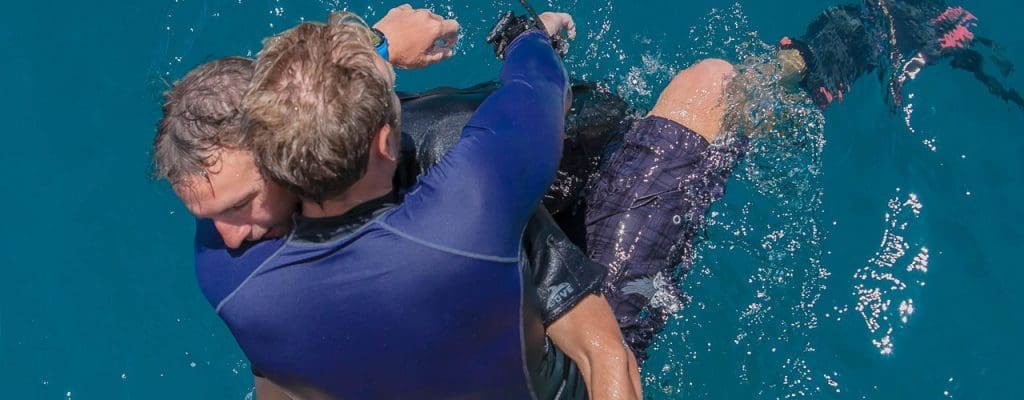
Recognize & manage stress in other divers, practice emergency management, rescuing panicked & unresponsive divers, at the surface and underwater. And Koh Tao is the best place to learn it.
PADI Rescue Diver Course Schedule
First Day
9am EFR Course (Emergency first aid)
If you require the EFR course, it will be scheduled for the first day.
Second Day
9am Knowledge Development
Discuss rescue scenarios & review theory.
1pm Shallow Water Skills Training
In confined water you learn the different rescue scenarios with a focus on process and situation management.
Third Day
9am Knowledge Development
A review of the shallow water skills training and solidifying of Rescue diver knowledge.
1pm Open Water Skills Training
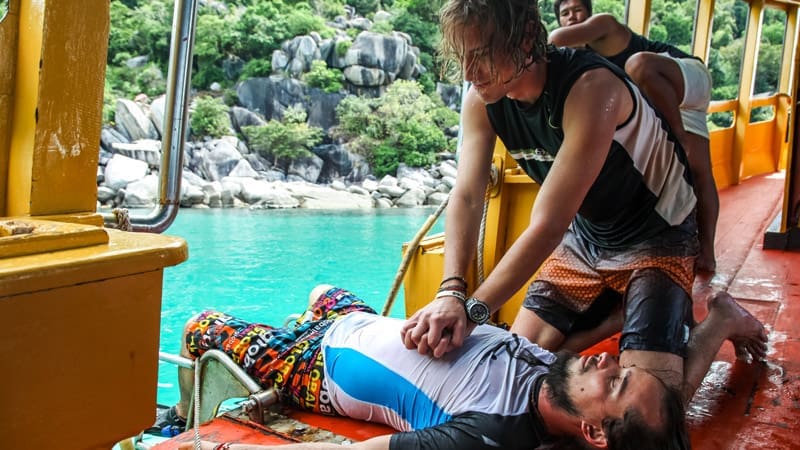
On the dive boat you learn how to manage realistic, simulated rescue scenarios which will increase in intensity. Urgency and managing stress is part of the training.
Fourth Day
9am Knowledge Reviews & Exam
Finalise the theory & sit your exam.
1pm Rescue Scenario Practice
The instructor will test your rescue abilities in a more realistic simulation, both increasing stress and intensity of the drills.
PADI Rescue Diver Course on Koh Tao Cost
12,000 THB · Rescue Course
(+ 4,000 THB for EFR if you don’t have a current first-aid/CPR)
Scenario-based training • Confined + open water sessions • Full rental gear (incl. computer) • Instructor briefings & materials • Certification fee
EFR add-on (if needed): First Aid + CPR course • Skills workshops • Materials • Certification
Contact one of our PADI instructors now for more information.
First Aid & CPR
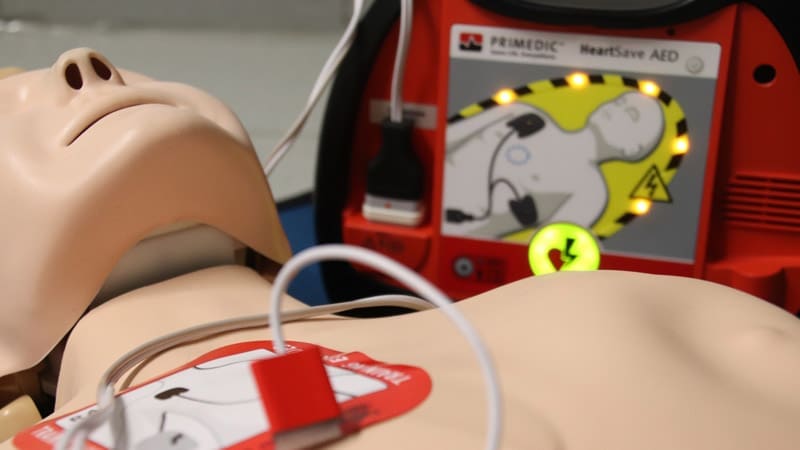
An important part of the PADI Rescue diver course is to know how to perform current industry standard CPR and first aid techniques.
The Emergency First Response (EFR) course teaches you how to respond to life threatening emergencies.
Develop knowledge & confidence in safety assessments, rescue breathing, CPR, airway, serious bleeding, shock and spinal injury management.

Prerequisites
- To be an Adventure diver (for PADI) or above
- 12 years and over
- Be medically fit according to the medical statement. (Download Here)
PADI Rescue Diver – Frequently Asked Questions
How long does the PADI Rescue Diver course take?
Typically 3–4 days including EFR. If you already have a valid First Aid/CPR (≤24 months), Rescue itself usually takes 2–3 days. We adjust the schedule for conditions and comfort.
Do I need the EFR (First Aid/CPR) course?
Yes, unless you hold a current First Aid/CPR certification (≤24 months). If you need it, we can add EFR on site (about one day).
What are the prerequisites?
Adventure Diver (or higher), age 12+, medically fit per the PADI Medical Statement (doctor’s clearance if required). Junior divers follow depth and supervision limits.
What skills will I learn?
Prevention and self-rescue, recognizing stress, assisting panicked/unresponsive divers, missing diver search patterns, surfacing and exits, oxygen/first-aid coordination, and incident management.
What’s included in the 12,000 THB price?
Instructor training in confined + open water, scenario practice, full rental gear (including dive computer), learning materials/briefings, Bauer Pure Air fills, and certification processing.
How big are the groups?
We keep groups small (typically max ~6:1) for coaching, safety, and comfort. Private options are available on request.
Is there an exam?
You’ll complete knowledge reviews and a final theory check, plus practical assessments during scenarios. If you add EFR, that course includes its own short knowledge checks.
How physically demanding is Rescue?
It’s active but scalable. We build up gradually so you can manage tows, exits, and problem-solving under stress safely and confidently.
What should I bring?
Swimwear, towel, reef-safe sunscreen, water bottle, and an ID for certification. If you have your own dive gear, you’re welcome to use it (we also provide everything).
What’s next after Rescue?
Most divers continue to Emergency Oxygen Provider, Nitrox, or start the Divemaster program. We offer multi-course packages—ask us for details.
Contact Us: